Fanny Robin
Far from the Madding CrowdFanny Robin is a young servant formerly employed by Bathsheba Everdene, and a largely absent figure whose story is pieced together through other people’s discoveries, reports, and acts of remembrance. Her attempt to reach Sergeant Troy and marry him ends not in reunion but in death in the Casterbridge Union-house. The delayed revelation that she died with Troy’s child makes her absence a central source of grief and guilt, and brings the private consequences of his promises into the lives of Bathsheba and the community around them.
Identity and Disappearance
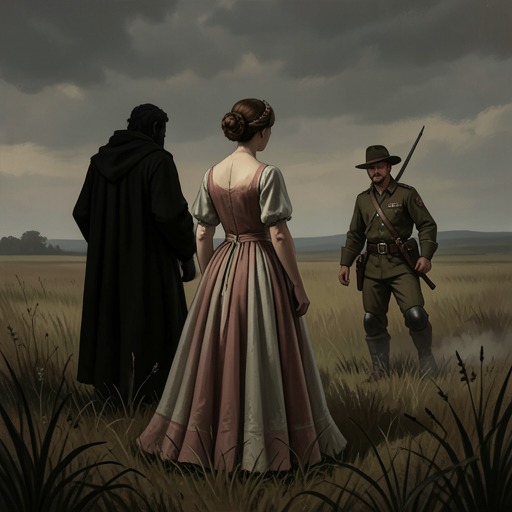
Fanny is identified at Weatherbury as Bathsheba’s youngest servant. When she fails to return one night, the household’s concern grows because she has seemed low-spirited and was last seen leaving in her indoor working gown, without a bonnet. Bathsheba initially knows little about Fanny’s private life. A fellow servant reports that Fanny has a young man in Casterbridge, believed to be a soldier, but does not know his name. Bathsheba orders inquiries to be made quietly and asks that someone visit the barracks if Fanny has not returned the following day. Her unease is sharpened by the fact that Fanny has no known living friends or relations to look after her.
The search produces no immediate news. Men drag Newmill Pond without finding her, and inquiries at a public house in Yalbury also fail. William Smallbury eventually reports that the Eleventh Dragoon Guards have left Casterbridge for Melchester. He assumes Fanny has followed her soldier, but this remains conjecture rather than confirmed knowledge. In the meantime, Bathsheba’s attention is divided between Fanny’s unexplained absence and the discovery that her bailiff, Pennyways, has stolen barley. At the farm’s next gathering, Bathsheba announces that she has dismissed Pennyways and will manage without a bailiff, while asking again whether anyone has found Fanny. The two matters sit side by side: the farm’s new mistress is taking charge of its practical affairs, yet cannot discover what has happened to a vulnerable young woman who has left her household.
The Promise of Marriage
Fanny’s relationship with Troy is disclosed gradually, and the contrast between her trust and his evasions defines its course. During a snowy night, she reaches the barracks and calls to a window, identifying herself as Troy’s wife, though they have not yet married. She has walked part of the way from Weatherbury and travelled the rest by carrier. Troy says that he did not expect her and had not thought she would come. When she asks when they will marry, he first claims not to remember his promise, then agrees that if he gave it, he will keep it. Fanny asks whether the wedding will be by banns or licence and points out that they live in different parishes, so the banns must be published in both. Troy postpones the arrangements, saying they will settle them in a few days and that he has not yet obtained the officers’ permission.
The scene at the barracks makes the imbalance in their expectations visible without resolving it. Fanny has made the difficult journey because she believes Troy’s promise, and asks directly when it will be fulfilled. He offers reassurance, but not a settled date or action. The promised marriage remains suspended between personal commitment and practical requirements: the separate parishes, the banns, and Troy’s stated need for permission from his officers. Fanny’s hope persists even as the exchange gives her little certainty.
A letter that reaches Gabriel Oak later appears to confirm her confidence. Fanny thanks him for his kindness on the night she left Weatherbury and returns money he had lent her, insisting that it was a loan, not a gift. She writes that she is happy because she is going to marry Troy, of the 11th Dragoon Guards, then quartered in Casterbridge. She describes him as respectable and honourable, and asks Oak to keep the news secret because she and Troy mean to return to Weatherbury as husband and wife. Boldwood reads the letter and doubts that the happy ending Fanny anticipates will come to pass. His caution proves warranted: the reader has seen Troy defer the marriage, while Fanny’s letter treats it as a secure future.
The Failed Wedding and Final Journey
The marriage fails at the church through a mistake that Fanny cannot repair. On a weekday morning, Troy arrives in uniform at All Saints’ Church, where a small congregation watches him wait alone. The clock marks half-past eleven, then the quarter hours and noon; no bride comes. After enduring the congregation’s growing attention, Troy leaves. Outside, he meets Fanny, who explains that she mistook All Souls’ for All Saints’. She had been at the other church door at the appointed time and waited until a quarter to twelve, thinking that if they had missed one another the ceremony might take place the next day. Troy rebukes her for the mistake, laughs at the suggestion of returning the next day, and walks away without setting a new date. The failure is not presented as a deliberate refusal by Fanny: she has gone to the wrong church, while Troy’s response leaves the marriage unfulfilled.
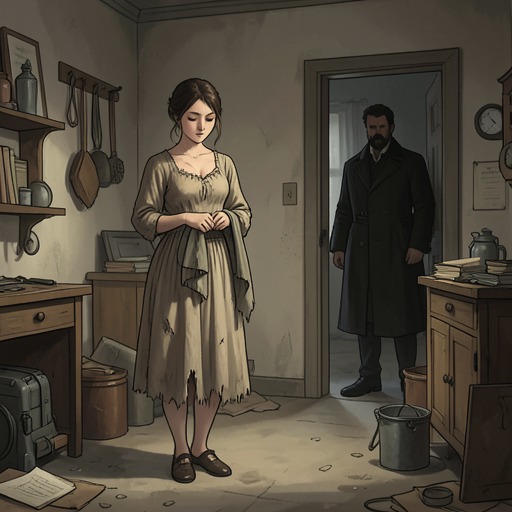
Later, Troy encounters Fanny on the road while travelling with Bathsheba. She is in extreme poverty and asks him when the Casterbridge Union-house closes. Troy recognizes her voice but initially answers that he does not know. When she looks up and recognizes him, she collapses. He helps her up, asks why she did not write, and gives her what he says is every farthing he has left. Fanny says that she has no money and intends to go to the Union-house. Troy first tells her she must not go there, then accepts it as the only immediate option he can arrange. He tells her to stay there overnight and the following day, and makes an appointment to meet her on Grey’s Bridge on Monday at ten, promising to bring money and find her a lodging. He calls himself a brute as he says goodbye. When Bathsheba asks who the woman is, Troy conceals her identity, claiming only to know her by sight.
The appointment never becomes a reunion. Troy arrives at the bridge with twenty-seven pounds and ten shillings, including the twenty pounds he had obtained from Bathsheba and seven pounds ten of his own. He waits through the hour and into the next, but Fanny does not come: at that moment, she is being prepared for burial at the Union-house. Troy remembers that this is the second time she has failed to meet a serious engagement and leaves in anger, going to the races at Budmouth. Only later does he consider that illness may have prevented her from keeping this appointment. By the time he returns, the knowledge of her death confronts him.
Fanny dies in the Casterbridge Union-house after arriving worn out and in poor health. Joseph Poorgrass tells Bathsheba that she was taken ill in the morning and died that evening. He does not know the precise cause, describing her death as the result of general weakness. Bathsheba insists that Fanny should be brought back to Weatherbury and buried with respect. Although she first proposes a hearse, she decides that Joseph should use a clean blue spring wagon with red wheels, decorate it with evergreens and flowers, and have it drawn by a horse Fanny knew. The funeral arrangements recognize Fanny as an old servant of Bathsheba’s family, but they cannot undo the hardship that preceded her death.
Death, Revelation, and Remembrance
At the Union-house, Fanny’s coffin is passed through a small, high-set door in the gable of the building and placed on Joseph’s flower-filled wagon. The officials cover it with a worn but decent black cloth and give Joseph the registration certificate. The brief institutional handover contrasts with Bathsheba’s careful preparations for the journey and burial. On the coffin, an official has written the name “Fanny Robin and child.” Gabriel Oak sees the words and fears the pain their discovery would cause Bathsheba. He quietly rubs out “and child,” leaving Fanny’s name alone. His action postpones the revelation but cannot erase what it signifies.
When Troy returns and sees Fanny and the baby laid out in the house, he recognizes her. He kneels beside her and kisses her gently; Bathsheba, who has not yet understood their connection, asks whether he knows the dead woman. Troy confirms that he does and that it is Fanny. The discovery changes the meaning of his earlier secrecy: the impoverished woman on the road was not merely an acquaintance but the person to whom he had promised marriage, and the child beside her was theirs. Bathsheba’s immediate response is anguish at Troy’s attention to Fanny, while Troy’s grief and remorse become unmistakable. Fanny’s death thus brings her private history into the open through the bodies and names that had briefly been kept apart.
Troy’s response continues at Fanny’s grave. Having missed her at Grey’s Bridge, he spends all his remaining money on a marble tomb and its transport and installation in the churchyard at Weatherbury. He marks the vacant grave, then plants flowers for different seasons: snowdrops, hyacinths, crocuses, violets, daisies, and other varieties, placing some over her heart. The lavish memorial is a belated gesture made after the practical help he promised can no longer reach her. Its inscription names Fanny as beloved in his memory and identifies him as its maker. Bathsheba later finds the grave disturbed and reads the inscription; she helps fill the hole, gathers and replants the flowers, and arranges for the church gargoyle’s water to be diverted so that the damage will not recur.
Narrative Role and Legacy
Fanny’s story is shaped by delay and partial knowledge. Her absence first provokes rumours and searches; the letter makes her expected marriage seem settled; the failed church meeting reveals the fragility of that expectation; the encounter on the road exposes her destitution but leaves her identity hidden from Bathsheba. Only after Fanny’s death does the phrase on the coffin disclose that she had a child, and Troy’s reaction confirms the relationship. These successive disclosures make her fate a consequence not of one isolated misunderstanding alone but of the distance between Fanny’s reliance on Troy’s promises and his repeated postponements and concealments.
Her burial also connects personal remembrance with public and institutional responsibility. The Casterbridge Union-house handles her death through its procedures, while Bathsheba claims the responsibility of bringing a former servant home and Gabriel intervenes to shield her from the inscription’s full meaning. Troy’s marble monument preserves a more intimate account of their relationship, and Bathsheba’s later care for its flowers shows that Fanny remains present in the emotional landscape of the farm. Her life receives little direct narration, but the consequences of her absence repeatedly redirect the actions and understanding of the living.